
Introduction
Meat sorting is one of the most crucial steps in ensuring the highest quality products while maintaining stringent food safety standards in the world of poultry processing. Because food safety standards are developing. From chicken sorting machines to automatic weight sorting and AI sorting, the demand for efficient and hygienic sorting equipment is higher than before. But how do you ensure your sorting equipment not only meets industry demands but also adheres to food safety certification and HACCP compliance?
Let’s take a deep dive into the modern world of automated sorting and explore how advancements in vision sorting machines, automated quality control, and durable meat sorters are transforming poultry processing.
Why Hygiene Matters in Meat Sorting Equipment
When it comes to meat processing, hygiene isn’t just a regulatory issue—it’s a matter of public safety. A poorly maintained sorting system can easily become a breeding ground for contamination, compromising the quality of your products and putting your customers at risk. That’s why easy-to-clean sorting machines and washable sorting systems (Such as waterproof is IP65) are becoming non-negotiable for modern poultry processors.
Imagine this: you’re running a chicken sorting machine, handling hundreds of birds per hour, and one small piece of fat or blood gets stuck in the machine’s components. Over time, these residues can contaminate batches, leading to potential recalls. Not only would that be a logistical nightmare, but it would also cost you your reputation.
That’s why systems designed with open designs for easy cleaning, FDA approved materials, and washable components are more popular than ever. A durable meat sorter that can withstand frequent washdowns without sacrificing performance is a must-have for any processing plant.
What Is Meat Sorting?
Meat sorting refers to the process of categorizing meat products by various attributes, such as weight, size, shape, and even quality. While manual sorting was once the norm, advancements in automation have completely transformed this process.
Modern meat sorting equipment leverages technologies like optical sorting technology, vision sorting machines, and AI sorting to handle large volumes with precision. These systems are designed to improve sorting accuracy, streamline the sorting process, and reduce labor costs—all while maintaining strict hygiene standards.
The Rise of Automated Meat Sorting Equipment
Gone are the days when workers manually sorted beef, pork, and chicken by hand. Today, automated systems like automatic size sorting and automatic weight sorting machines are taking over the production floor. These systems are engineered to work faster, more efficiently, and with greater accuracy than human workers.
For example, pork sorting can be challenging due to the variability in weight. A weight grading machine for meat allows processors to sort pork cuts based on their exact weight—reducing errors and ensuring that each piece meets the desired specifications.
One of the most powerful aspects of automated sorting is sorting capacity. Modern sorting systems can process tons per hour, dramatically increasing throughput and allowing processors to meet demand without compromising quality. For example, a poultry processing plant can sort hundreds of chickens per hour, while maintaining the highest levels of sorting accuracy.
Technologies That Make Automated Meat Sorting Possible
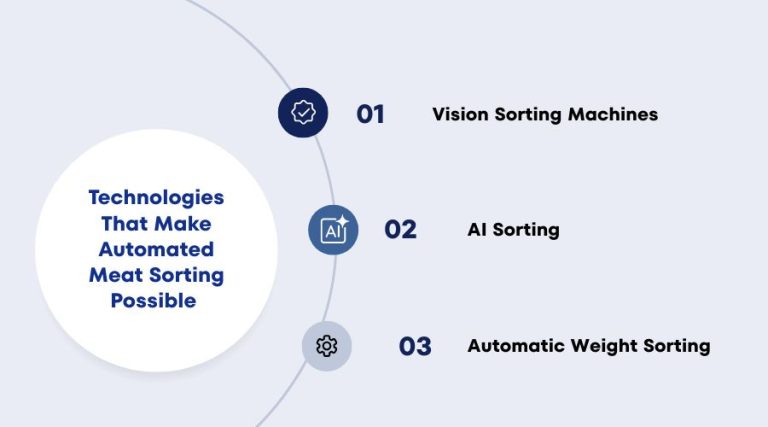
There are a few key technologies driving the revolution in automated quality control for meat sorting:
Vision sorting machines use cameras and sensors to analyze the meat’s appearance, ensuring it meets the required standards for color, shape, and size. These machines can detect defects, bruises, and other imperfections that would be invisible to the naked eye. This technology is especially useful for meat cut sorting, where precise categorization is critical.
2. AI Sorting
AI-based sorting systems use machine learning algorithms to continuously improve sorting accuracy. These systems can analyze vast amounts of data to make real-time decisions about how to classify meat products based on multiple attributes, such as weight and size. With AI sorting, processing plants can achieve greater consistency and reduce human error in the sorting process.
3. Automatic Weight Sorting
Automatic weight sorting is the most commonly used sorting method in the poultry industry. The sorting systems can automatically categorize meat cuts based on their weight, ensuring that all products are packed to specification. Whether you’re processing beef, pork, or chicken, these automated sorting systems help maintain product consistency and ensure that each piece meets quality standards.
Benefits of Hygienic Meat Sorting Equipment
Enhanced Food Safety
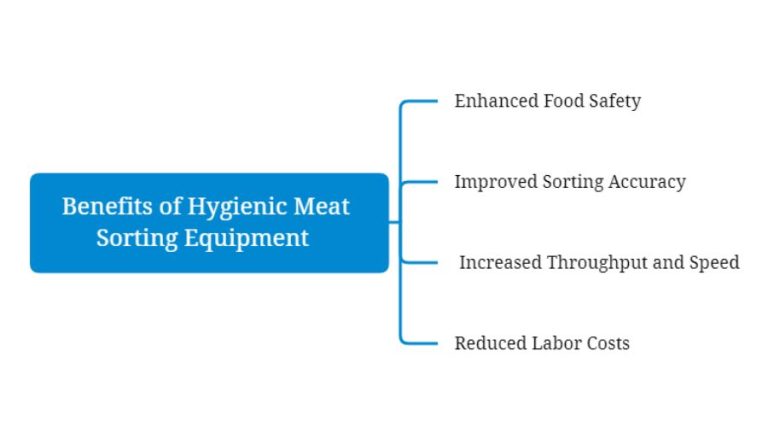
By using automated sorting systems that are HACCP compliant, processors can significantly reduce the risk of contamination. FDA-approved materials and easy-to-clean sorting machines ensure that every machine component can be sanitized quickly and thoroughly, maintaining strict hygiene standards.
For example, in meat sorting for beef, keeping the equipment free of bacteria is crucial because beef products often have more contact with surfaces during processing. A washable sorting system that can be sanitized between batches ensures the meat is handled safely at all stages.
Sorting accuracy is paramount in ensuring that your products meet market standards. Using vision sorting machines and optical sorting technology enhances sorting precision, enabling machines to quickly identify any variations in size or weight. These systems can achieve a level of sorting accuracy that is difficult for human workers to replicate.
Take, for example, chicken sorting machine technology: it ensures that each piece of chicken, whether it’s a whole bird or a portion, is sorted according to its exact specifications—whether by weight, size, or even meat quality.
Increased Throughput and Speed
With sorting capacity reaching impressive figures, modern sorting systems can process more meat per hour than ever before. The speed of meat sorting machines helps meet high demand, while the technology ensures that quality is never sacrificed for efficiency. In fact, automated sorting can improve meat sorting speed by reducing downtime and ensuring consistent processing.
For example, a meat sorting machine processing tons per hour can handle large quantities of poultry, while a size grading machine for meat can ensure that every piece is perfectly sorted without delays.
Reduced Labor Costs
By automating the sorting process, poultry processing plants can reduce their reliance on human labor. Not only does this cut labor costs, but it also minimizes the risk of human error. Automation leads to more consistent results and allows employees to focus on other aspects of the operation, like packaging or quality control.
Ensuring Compliance with Food Safety Regulations
In the highly regulated world of food processing, ensuring HACCP compliance is a must. Meat sorting systems that are designed with food safety certification in mind help processors stay ahead of regulations while maintaining product quality. Many modern sorting machines are FDA approved and meet EU standards, giving processors the confidence that their systems are compliant with international food safety standards.
Selecting the Right Meat Sorting System for Your Poultry Processing Plant

When choosing a sorting system, it’s important to consider several factors to ensure you select the right equipment for your facility’s needs:
Sorting Capacity (Throughput and Speed)
How many tons per hour will the system need to process? Ensure that the sorting capacity of the equipment aligns with your facility’s production demands. Determine the meat sorting speed and throughput that your facility requires. If your plant processes large volumes, investing in high-capacity systems will help you meet demand without sacrificing quality.
Product Type
Different meat types require different sorting technologies. For meat sorting for beef, you may need a heavier-duty machine than for chicken sorting machine applications. Ensure the machine is versatile enough to handle your specific meat types.
Hygiene Features
Look for systems that are easy-to-clean sorting machines and meet stringent HACCP compliance standards. Hygiene features such as washable sorting systems and FDA-approved materials should be non-negotiable.
Conclusion
The future of meat sorting in poultry processing is automated, hygienic, and more efficient than ever before. With automated sorting, AI sorting, and optical sorting technology leading the charge, the industry is poised for continued growth in efficiency, safety, and product quality. By investing in easy-to-clean sorting machines, washable sorting systems, and FDA-approved equipment, you can ensure that your plant not only meets but exceeds food safety standards, while also improving throughput and reducing costs.
As the poultry industry continues to evolve, embracing automated quality control and sorting accuracy technologies will position your processing plant to thrive in an increasingly competitive market.
FAQs
What is meat sorting, and why is it important in poultry processing?
Meat sorting is the process of categorizing meat by weight, size, shape, or quality. In poultry processing, sorting is critical because it ensures that products meet market specifications and food safety standards. Using automated sorting machines (such as vision sorting machines and AI sorting systems) helps improve sorting accuracy and efficiency while maintaining hygiene standards.
What should I look for when choosing a meat sorting machine for my facility?
When selecting a meat sorting machine, consider factors like:
- Sorting capacity and throughput requirements (how many tons per hour)
- Sorting accuracy and technology (vision sorting machines, AI sorting)
- Compliance with food safety certification (HACCP, FDA approved)
- Ease of cleaning and durability
Whether the machine is customizable for different types of meat, such as pork sorting or beef sorting for beef
By evaluating these factors, you can ensure that the sorting system you choose meets your production goals and hygiene standards.
Can I expect any post-purchase support for automated sorting equipment?
Yes, WEIGHTSORTING automated sorting machine manufacturers offer post-purchase support, including international service networks, remote diagnostics, and overseas installation support. These services ensure that your equipment stays in optimal condition and that any issues are quickly resolved, minimizing downtime and maintaining your production line’s efficiency.