
Introduction
Have you ever watched a seafood processing line and wondered how on earth people manage to sort thousands of fish, shrimp, or shellfish by size and weight… without losing their minds? Years ago, the answer was simple: a tired team of workers standing beside a conveyor belt, sorting by hand and hoping for the best. Today, the star of the show is the Automated Seafood Sorter — a fast, accurate, and incredibly reliable machine designed to tackle the messy world of seafood processing.
In this ultimate guide, we’re going to break down what an Automated Seafood Sorter really does, how it works, why seafood factories can’t live without it, and how to choose the right system for your facility. Whether your main products are shrimp, salmon, squid, mussels, octopus, or whole fish, you’ll soon see why seafood processors around the world are shouting the same thing: “We should’ve upgraded sooner!”
What Is an Automated Seafood Sorter?
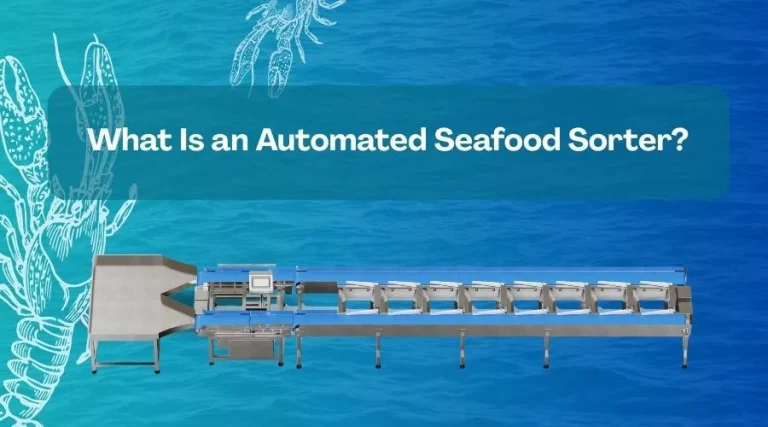
At its core, an Automated Seafood Sorter is a machine designed to categorize seafood by weight, size, shape, or visual quality. Instead of relying on human guesswork, it uses precise technology—like weight sensors or cameras—to do the job automatically. The result? Faster sorting, consistent product quality, and way less labor fatigue. Imagine never arguing about whether a fish is “medium” or “large” again. Heaven, right?
You’ll often hear these machines described with terms like Industrial Seafood Grader, Weight-based Sorter, or Whole Fish Sizing Machine. Some models are built to specialize in specific products, like a Salmon Weight Grader, Shrimp Weight Grader, or Prawn Weight Classifier, while others handle shellfish systems like a Mussel Optical Sorter or Clam Weighing & Batching System. No matter the product, the purpose is the same: automate the messy job of sorting fish and maximize efficiency.
Why Seafood Processors Are Switching to Automation
Picture this: you’re running a busy seafood factory. Orders are piling up, workers are rushing, and every minute costs money. Sorting by hand is slow and inconsistent. One person might call a shrimp “medium,” while another thinks it’s closer to “large.” This inconsistency leads to headaches with product quality, customer complaints, and market rejection.
But with an Automated Seafood Sorter, you finally get:
Faster production speed
Better yield control
Reduced labor errors and fatigue
Improved hygienic standards
It’s not just efficiency; it’s peace of mind. Customers get exactly what they order, and you get to sleep without worrying about sorting mistakes.
Main Technologies in Automated Seafood Sorters
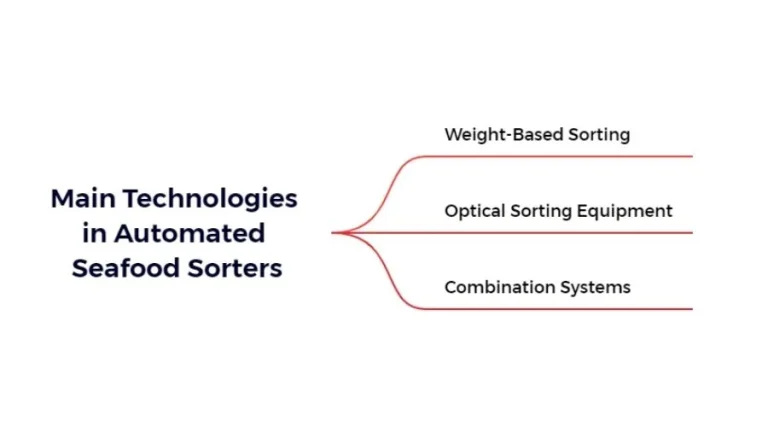
Not all sorting machines work the same way. Depending on your product, you may need AI imaging or simple weighing sensors. Here’s what typically powers an Automated Seafood Sorter:
- Weight-Based Sorting
Perfect for whole fish, squid, octopus, prawns, and even clams. With ultra-fast sensors, machines like the Octopus Weight Sorter, Squid Size Grading Machine, or Calamari Length Classifier can sort at high capacities with jaw-dropping precision. No guessing, just data.
- Optical Sorting Equipment
AI cameras inspect seafood for size, color, surface defects, and even contamination. Equipment like Optical Sorting Equipment for Seafood or Optical Sorter AI is especially helpful when dealing with irregular shapes like squid tentacles or mussel shells.
- Combination Systems
Some modern fish sorting machines go all-in with multiple capabilities: weight + optical + data tracking. These models are useful for factories needing full traceability, grading transparency, and tight quality control standards.
Real-Life Example: Why Weight Accuracy Matters
Let’s say you run a factory that processes salmon. You sell products in fixed weight classes. If a Salmon Weight Grader sorts inaccurately, you might end up giving customers heavier fish than they paid for. Sounds generous… until you realize you’re losing thousands of dollars a month.
Now imagine an accurate Weight Classifier that gets it right every time. Suddenly, your revenue jumps without extra effort. That’s the type of “magic” seafood companies are experiencing with modern automated sorting.
Hygiene, Compliance & Safety Standards
Seafood is delicate. If machines aren’t clean and safe, bacterial risks skyrocket. WEIGHTSORTING seafood graders prioritize hygiene with:
- Food Grade SUS304 Stainless
- Open Design Easy Cleaning
- IP65 Washdown Protection
- Hygienic Design
For regulatory compliance, processors rely on HACCP Compliant, CE Approved Sorting Machine, and FDA Approved Materials. These aren’t just fancy labels — they determine whether your products can enter competitive markets like the EU, US, and Australia.
If your current equipment doesn’t meet these standards, your market access is already limited. That alone is a powerful reason to upgrade.
Fish Bone X-Ray Inspection System: Keeping Seafood Safe
Seafood can contain hidden contaminants — not fun surprises for anyone. Sharp bones, shell fragments, broken claws, or even small metal pieces, can wind up in products. Some advanced graders integrate Fish Bone X-Ray Inspection System, which scans products before and during sorting.
Imagine removing shells from deveined shrimp or detecting bone fragments in fillets before shipment. That’s not just efficiency — it’s brand protection.
Integration, Traceability & Smart Data

Modern factories don’t just want a machine; they want a connected system. Today’s sorters integrate with:
Integration with Conveyors
Fish Bone X-Ray Inspection System
Data Traceability Software
Remote Monitoring
Remote Diagnostics
Think about it: being able to see live sorting data on your phone, track product yield in real time, or diagnose issues remotely — that’s the definition of next-level factory intelligence.
Choosing the Right Automated Seafood Sorter
Here’s a simplified roadmap to picking the perfect system:
| Criteria | Why It Matters |
|---|---|
| Product Type (fish/shrimp/shellfish) | Determines capacity and technology |
| Sorting Method (weight/optical/mixed) | Impacts consistency and speed |
| Capacity | Ensures production keeps up with demand |
| Sorting Accuracy | Reduces giveaway and product loss |
| Hygienic Design | Avoids contamination risks |
| IP65 Washdown Protection | Withstands cleaning |
| Traceability/Software | Enables smart management |
No single machine fits all. A Shrimp Weight Grader won’t work well for mussels, and a Mussel Optical Sorter won’t be efficient for squid.
Before investing, list your exact needs. Think product mix, daily volume, packaging types, and your growth expectations.
Why Overseas Support Matters
Many seafood processors worry about one thing when buying equipment: “Who will help if the machine breaks?” That’s why top brands (Such as WEIGHTSORTING) offer:
- International Service Network
- Overseas Installation Support
- Remote Monitoring
- Remote Diagnostics
With these services, distance is no longer a barrier. You’ll never feel stranded with a malfunctioning machine while orders pile up.
Conclusion
Seafood demand is rising globally, and so is quality expectation. Factories that stay with manual sorting will fall behind, while those who adopt smart, automated sorting systems will grow faster, gain more trusted contracts, and reduce waste dramatically.
In short: an Automated Seafood Sorter isn’t just equipment — it’s a growth strategy.
Imagine faster production, cleaner processing, consistent grading, and happier customers. That’s the future of seafood processing, and it’s closer than you think.
FAQs
Which seafood products can be sorted by machine?
Different machines are designed for specific needs, including:
- Salmon Weight Grader
- Shrimp Weight Grader
- Prawn Weight Classifier
- Whole Fish Sizing Machine
- Squid Size Grading Machine
- Calamari Length Classifier
- Octopus Weight Sorter
- Mussel Optical Sorter
- Clam Weighing & Batching System
If your factory processes multiple species, mixed systems or optical sorters may work best.
Are automated sorters designed for food safety certification?
Yes. Top models are built with Food Grade SUS304 Stainless, Open Design Easy Cleaning, and IP65 Washdown Protection. Many are HACCP Compliant, made with FDA-approved materials, and recognized as CE-approved sorting Machine systems for global market access.
What technology improves accuracy most?
Accuracy is driven by:
- Intelligent Optical Sorter AI platforms
- High-speed weighing sensors used in Continuous Grading Machine
- Smart vision cameras found in Optical Sorting Equipment for Seafood
Combining these with Dynamic Checkweigher Seafood systems delivers the highest production consistency.