
Introduction
In industrial food production, balancing product classification precision with maximum line speed is the ultimate engineering challenge. For plant managers, procurement officers, and quality assurance directors across the seafood, poultry, and agricultural sectors, choosing the right automation setup comes down to a fundamental operational puzzle: How many weight grades can a weight sorting machine handle without reducing throughput?
At WEIGHT SORTING, we interact daily with processing facilities struggling to scale up their classification criteria. Whether you operate an Industrial Meat Weight Grader, a high-volume fruit sorting machine, or a highly specialized system for the sorting and grading of fish, the math remains unchanged: if your mechanical gating, software processing, or channel switching speed cannot keep pace with your raw inflow, your entire packaging hall faces a costly bottleneck.
This comprehensive guide breaks down the physical, electronic, and mechanical parameters that dictate high-capacity sorting limits. We analyze how to scale your weight grades effectively, examine the engineering variables that buyers must evaluate during procurement, and provide a deep dive into real-world applications—from cold shrimp sorting to high-speed chicken wing grading.
Defining the Core Conflict: Weight Grades vs. Throughput

To understand the operational limits of automated classification, one must first explore what is sorting in a high-speed dynamic environment. At its architectural core, an auto sorting machine processes items sequentially across three distinct mechanical phases:
Infeed & Spacing: Aligning items linearly with consistent physical gaps.
Dynamic Weighing: Passing the item over an ultra-precise load cell to measure mass in milliseconds.
Discharge/Rejection: Directing the item into its matching collection bin or packaging channel.
The primary constraint on a weight sorting machine is not the digital processing power required to categorize data into multiple weight grades. Modern digital signal processors (DSPs) can calculate classifications into dozens of distinct ranges in microseconds. Instead, the true bottleneck lies in channel switching speed, rejection time accuracy, and the physical footprint of the sorting system.
When a processing line scales from a modest 6-grade system to a highly granular 14-grade export sorting system, the physical length of the conveyor line sorting system must expand significantly to accommodate the additional discharge chutes. As the physical distance between the weighing cell and the final sorting gate grows, maintaining precise tracking of each individual item becomes infinitely more complex. If the mechanical sorting equipment cannot actuate, reset, and stabilize before the next piece arrives, the line must be slowed down—directly impacting your overall throughput rate.
Technical Parameters Buyers Must Evaluate During Procurement
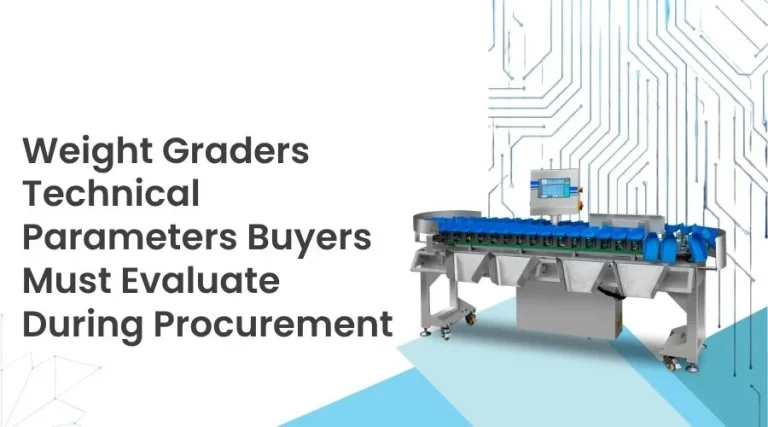
The physical capability of any sorting machinery line is defined by its hardware configuration.
Sorting Gates: The actual mechanical drops, pushers, air-jets, or swing arms that divert products.
Preset Weight Zones: The software configurations that route items based on specified mathematical ranges.
While a multi-channel Weight Sorter can technically support an unlimited number of software zones, the number of physical gates directly alters item velocity. For instance, a 10-grade system requires ten discrete drop points. If your product line expands and requires a 14-grade export sorting system, those extra four gates add significant physical length to the conveyor line sorting system. This expansion places a premium on long-range tracking software to prevent tracking drift down the line.
Channel Switching Speed and Rejection Time Accuracy
As items move down the line at speeds exceeding 2m/s, the window of opportunity to divert a single piece closes rapidly. Rejection time accuracy measures the precise temporal sync between the sensor array and the pneumatic or mechanical actuator. If you are grading small items like cold shrimp sorting runs or tender pieces during fruit sorting, the channel switching speed must be flawless. A lag of even 12 milliseconds will cause an item to clip the edge of a divider blade, causing physical product damage or mis-sorting items into the wrong weight grades bin.
Structural Integrity: The IP66K Washdown Weight Grader
In meat, poultry, and seafood plants, high-speed sorting performance is worthless if the machine cannot withstand daily sanitation regimes. An IP69K Washdown Weight Grader is built with fully laser-welded stainless steel housings, hermetically sealed load cells, and smooth surfaces designed to prevent bacterial accumulation. Choosing food-grade sorting equipment ensures that chemical washdowns at temperatures up to 80°C and pressures up to 100 bar will not degrade sensor accuracy or cause electronic calibration drift.
High-Traffic Comparison: 6-Grade, 10-Grade, and 14-Grade Export Systems
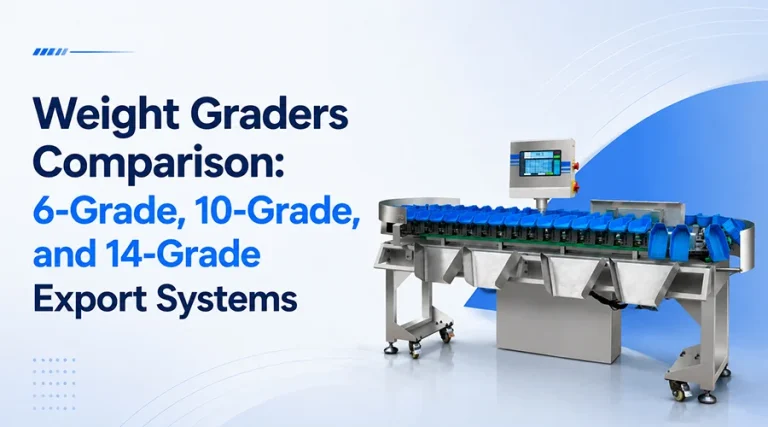
Choosing the ideal configuration requires matching your business goals with the mechanical realities of the sorting facility. Let’s examine how expanding the number of targets affects line efficiency:
| System Type | Typical Applications | Throughput Capacity (Typical) | Key Bottleneck |
|---|---|---|---|
| 6-Grade Systems | Local retail packaging, simple sizing for bulk wholesale fruit or whole poultry. | Up to 300 pieces/minute | Highly stable; rarely limits maximum load cell speed. |
| 10-Grade Systems | Standard chicken wing grading, commercial fish sorting, bulk food service packs. | 180 - 240 pieces/minute | Requires excellent line spacing to avoid item tracking overlap. |
| 14-Grade Export Systems | High-value international cold shrimp sorting, precise sorting of fruits for premium markets. | 120 - 160 pieces/minute | Requires advanced multi-channel Weight Sorter logic and extended conveyors. |
As shown above, as the number of weight grades escalates toward a 14-grade export sorting system, maximum raw throughput generally experiences a controlled decrease to safeguard rejection time accuracy. However, advanced systems from premium sorting machines builders use split-lane or multi-channel paths to maintain high numbers of grades without dropping line speeds.
Deep-Dive Industry Applications: From Seafood to Agriculture
The Complexities of Seafood: Fish Sorting & Cold Shrimp Sorting

In the marine processing sector, sorting in food processing deals with highly delicate, slippery, and irregularly shaped products.
When handling the sorting of fish, whether utilizing a standalone fish sorting machine or an expansive multi-stage system, moisture is a major variable. Surface water can cling to the weighing bed, altering the tare weight calculation.
For cold shrimp sorting, products are categorized into precise count-per-pound ranges (e.g., 16/20, 21/25). Because shrimp are small and light, a multi-channel Weight Sorter must employ lightweight flipper gates or gentle air-rejection arrays to maintain high sorting speeds without tearing the delicate shrimp meat.
Specialized Seafood: Crabs and Irregular Products
Beyond standard fish sorting, specialized crustaceans like crab processing require durable hardware. Crabs possess hard shells and variable limbs that can catch on traditional conveyor belts. Processing these products requires an industrial-grade food sorting machine equipped with specialized wide-set pocket belts or a Circular Weight Grader for Poultry/Beef repurposed for heavy marine items to keep products stable through the weighing field.
Poultry Processing: Chicken Wing Grading
The poultry sector demands massive volume alongside high sanitation standards. A Circular Weight Grader for Poultry/Beef is often deployed here because its compact, rotary design allows a high number of discharge stations within a small physical footprint.
During high-velocity chicken wing grading, items must be accurately divided into drummettes, mid-joints, and tips. Because poultry parts are naturally moist and sticky, the food sorting equipment must utilize non-stick, hydrophobic belt materials to prevent wings from sticking to the line, which can ruin mechanical timing and cause tracking errors.
Agricultural Processing: Fruits, Vegetables, and Nuts
In agriculture, lines shift from weight-only tracking toward hybrid setups that combine physical mass sensors with automated vision tech. A high-capacity fruit sorting machine or vegetable sorting machine handles millions of individual units daily.
Fruit Sizing: During fruit sorting, items like apples, citrus, or stone fruits are spun dynamically across vision arrays while crossing load cells. This automated sorting of fruits allows the system to cross-reference weight with external color, shape, and defect analysis.
Vegetable Tracking: A heavy-duty potato sorting machine filters out dirt, stones, and odd shapes before boxing.
Bulk Goods: In nuts sorting lines, high-frequency optical channels work alongside quick drop-gates to clean massive volumes of loose items at incredible speeds.
Whether you run a regional potato sorting machine or a global fruit sorting equipment setup, managing bulk inflows without bruising delicate fresh produce is essential for maximizing yield.
How to Configure a High-Speed Weight Sorting Line for Maximum Yield
To implement an optimized sorting setup that preserves throughput while handling multiple classification grades, teams must follow a precise deployment strategy.
Step 1: Establish the Minimum Product Spacing (Pitch)
Calculate the maximum speed of your upstream production line. Adjust the infeed conveyor velocity to create a physical gap between products that is at least 1.5 times the length of the longest product item. This spacing ensures the load cell can return to zero and stabilize between individual weigh cycles.
Step 2: Optimize the Load Cell Filter Settings
Configure the digital signal processor (DSP) to cancel out environmental building vibrations and low-frequency motor noise. For high-speed lines, use a high-frequency sample rate (e.g., up to 4000Hz) to ensure the system captures an accurate weight reading within the millisecond window the item crosses the weighing bed.
Step 3: Match the Mechanical Gate Style to the Product Matrix
Select the proper discharge mechanism based on item density and fragility. Use air-blast nozzles for light items under 50g (like small shrimp or nuts), high-speed overhead flippers for mid-weight items up to 1000g (like chicken wings or citrus fruit), and heavy-duty pneumatic pusher arms for items exceeding 3000g.
Step 4: Program the Tracking and Divert Delay Timers & Perform Static and Dynamic Calibration Tests
Input the exact physical distance between the end of the weighing conveyor and each sequential sorting gate into the system controller. Synchronize the system’s tracking clock with the encoder on the conveyor belt to ensure the rejection time accuracy adjusts automatically if the master line speed changes.
Run certified test weights across the system dynamically at full operational speed. Verify that the multi-channel Weight Sorter routes the test objects to their designated zones with 100% accuracy across multiple consecutive cycles before initiating live product runs.
Strategic Summary: Key Takeaways for High-Performance Sorting
Maximizing your line’s sorting capabilities without sacrificing raw production capacity requires a careful balance of mechanical speed, precise software tracking, and application-specific hardware.
Sizing System Limits: While basic configurations like a 6-grade system offer high mechanical stability, moving up to a granular 14-grade export sorting system demands longer tracking runs and optimized item spacing to avoid line bottlenecks.
Mechanical Synchronization: Maintaining line velocity depends directly on maintaining tight rejection time accuracy and using responsive valves capable of adapting to shifting conveyor speeds.
Hygienic Engineering: For protein and marine operations, using an IP66K/IP69K Washdown Weight Grader prevents moisture ingress and electronic drift during intensive sanitation cleanings.
Application Alignment: Matching your discharge gate styles to the physical properties of your product—whether running delicate cold shrimp sorting paths or handling robust agricultural items on a potato sorting machine—protects your product quality and optimizes final yields.
By focusing on these foundational variables, processing plants can implement high-capacity sorting systems that protect profit margins, maintain food safety standards, and keep high-volume production lines moving efficiently.
FAQs
How many weight grades can an auto sorting machine handle before line throughput drops?
In high-velocity production lines, an auto sorting machine or a specialized multi-channel Weight Sorter can typically handle up to 6 to 8 weight grades with zero reduction in throughput. When scaling up to a 10-grade, a 14-grade or above export sorting system, the physical length of the conveyor line sorting system must increase to accommodate the extra discharge gates. To prevent a drop in production speed at these higher grades, the system must utilize high-speed channel switching speed and advanced tracking software to ensure items do not overlap as they travel through the sorting facility.
How does an IP66K/IP69K Washdown Weight Grader maintain accuracy during high-volume fish sorting?
Moisture and salt are major challenges during the sorting and grading of fish. An IP66K/IP69K Washdown Weight Grader solves this by using hermetically sealed load cells that prevent water ingress during high-pressure cleanings. When performing continuous fish sorting or using a dedicated fish sorting machine, surface water from the product can cling to the weigh belt, causing calibration drift. Advanced sorting machinery filters out this dynamic noise using real-time automatic tare software, allowing high-speed sorting fish runs to maintain precision down to fractions of a gram.
What mechanical factors prevent product damage during automated cold shrimp sorting and fruit sorting?
When handling delicate items, the choice of mechanical sorting equipment is critical to avoid bruising or tearing. For cold shrimp sorting, high-speed air-blast nozzles or ultra-lightweight flippers are used to move the light product without damaging the meat. Similarly, in high-capacity fruit sorting or automated sorting of fruits, a modern fruit sorting machine or specialized fruit sorting equipment utilizes smooth, padded transfer chutes and soft-drop collection bins. This ensures that the automated sorting in food processing paths do not degrade the fresh quality of premium produce.