Introduction
Food processing facilities are assets with thin margins that operate under stringent quality controls around the globe. Facility directors, process engineers, and supply chain managers face the constant challenge of reducing operational waste while keeping output at peak. The changes on processing lines for agricultural products stem from shifting consumer preferences for pack types. This really begs the question at the heart of modern operations: how do AI sorting systems reduce food waste compared to processing manually or with mechanical sorting?
Historically, reliance on manual inspection or physical mechanical screening led to high rates of good product loss. Manual sorting lines suffer from human fatigue, while basic mechanical sorters lack the precision to distinguish between an actual cosmetic flaw and a critical structural defect. Over-segregation often leads to premium raw ingredients being mistakenly thrown into the waste bin, directly reducing final yield and extending the payback period of your assembly infrastructure.
The introduction of advanced AI Sorting Technology has changed this dynamic completely. At Easyweigh and Foodman, we design next-generation food sorting equipment that helps facilities optimize their sorting routines. This guide breaks down how an intelligent sorting system reduces food waste, examines the software behind smart product recovery, and outlines a clear strategy for modernizing your production line to maximize total yield.
Causes of Waste in Traditional Sorting Systems
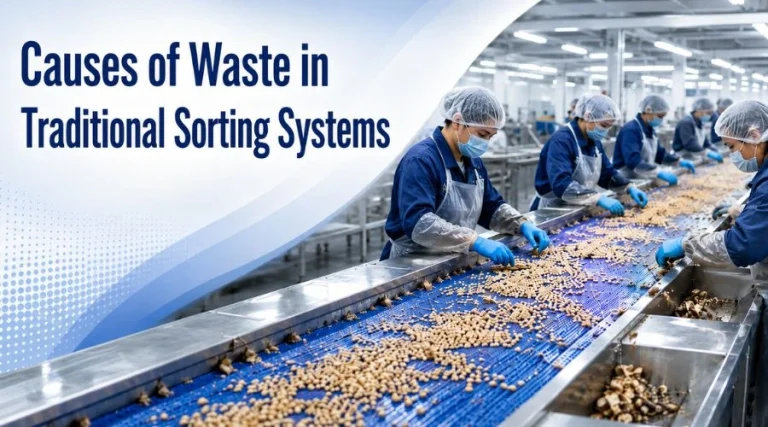
To understand how modern AI sorting machines minimize product loss, we must examine why legacy processing methods inherently generate high rates of waste.
Manual Inspection Barriers
jiaManual sorting lines depend entirely on human vision and quick decisions. In high-speed packaging facilities, an operator has only a fraction of a second to evaluate an item moving down a conveyor belt.
As a shift goes on, eye strain and physical fatigue lead to inconsistent results. To keep foreign materials from slipping through, operators often default to over-rejection. This defensive approach causes significant amounts of clean, edible product to be discarded alongside actual defects, increasing waste and driving down profit margins.
Limitations of Legacy Mechanical Sorting
Traditional automation, such as a basic mechanical sizing screen or an early-model color CCD sorting machine, relies on rigid, unchanging parameters. These systems categorize items based entirely on basic size measurements or a simple color threshold.
When an organic product with natural color variations moves through the line, a standard optical sorter machine lacks the logical context to analyze it accurately. It cannot tell the difference between a minor, harmless skin variation and a critical rot spot. The machine flags the slight variation as a defect and triggers its pneumatic ejectors, blowing premium product into the waste stream.
This simple binary decision model drives up your false reject rate, making it difficult for plants to hit their output goals when processing variable raw materials.
AI Precision Grading and Yield Optimization
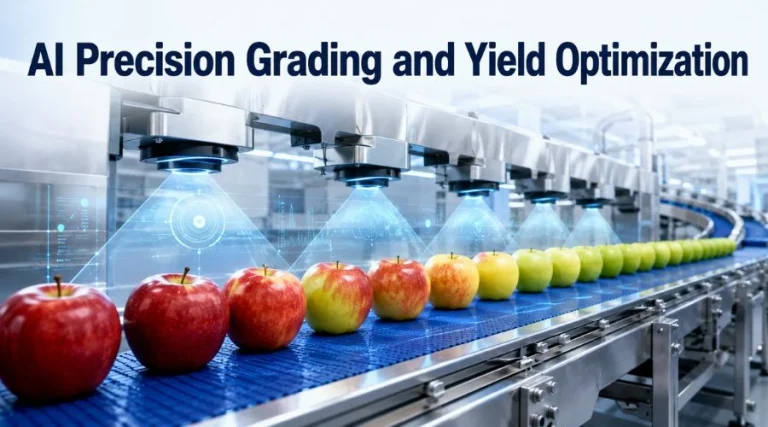
The transition to an advanced AI sorting machine or an integrated AI food sorting machine changes how a facility analyzes its product streams. By utilizing software driven by machine learning sorting and deep learning sorting networks, modern equipment functions as a smart image recognition platform.
When a product stream passes through the inspection chamber of a high-speed vision sorting machine, a multi-spectral vision inspection system captures clear image data of every single item in milliseconds. The deep learning sorting algorithms process these files through complex neural layers, evaluating surface texture, volumetric mass, shape symmetry, and multi-layered color profiles simultaneously.
This advanced pattern recognition allows an industrial vision sorting array to maintain exceptional sorting accuracy even during intense production surges. For example, on a high-throughput fruit sorting machine or tomato sorting machine line, the neural network understands that a slight shape distortion or an uneven skin blush is a normal organic trait rather than an active defect.
The machine adjusts its parameters in real time, preventing good product from being mistakenly rejected. By applying this precise, context-aware analysis, the system stabilizes its sorting sensitivity, allowing factories to optimize their raw yields and significantly lower product waste.
Reject vs. Recovery System Balance
Maximizing your yield requires a careful balance between strong defect removal and active product recovery. An advanced intelligent sorting system achieves this by moving away from basic binary sorting toward multi-tiered product classification.
When material moves through a modern design vision sorting machine, the software categorizes every item into distinct quality zones rather than just “good” or “bad.” If a vegetable sorting machine identifies a potato with a minor surface mark, the system does not simply discard it. Instead, the automated optical sorting software flags the item for a secondary recovery stream, routing it to a peeling or dicing line where it can still be safely processed for alternative uses.
To protect delicate items across these different paths, premium optical sorting equipment manages its mechanical components dynamically. When a delicate item is identified on a blueberry sorting machine or an automated fruit grading machine track, the controller reduces the pneumatic pressure sent to that specific air-jet valve.
This custom adjustment ensures that the air blast gently shifts the item without bruising it, protecting the fruit’s quality. By pairing smart software with variable physical controls, our advanced sorting machinery delivers precise defect detection and effective waste reduction across all product lines.
How to Set Up an AI Sorting System for Maximum Yield Recovery?
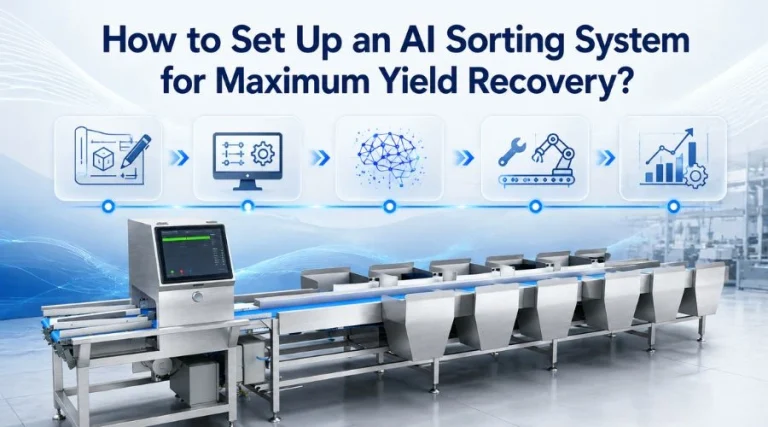
To successfully deploy an automated sorting strategy that minimizes food waste and maintains high throughput, technical teams should follow a standardized calibration process.
Step 1: Initialize the Target Neural Network Model
Pass a representative sample of your clean, high-grade products through the vision inspection system. Use the machine’s central controller to map the natural variations in color, shape, and surface texture, establishing a clear quality baseline within the machine learning sorting software.
Step 2: Program Multi-Tiered Sorting and Recovery Paths
Configure your intelligent sorting system to define distinct routing rules for different quality categories. Map your pneumatic ejector gates to separate your output into premium packs, alternative processing channels (such as dicing, purees, or juices), and true waste bins to prevent usable material from being discarded.
Step 3: Calibrate Dynamic Pneumatic Air Pressure Controls
Adjust the system’s air-blast pressure settings to match your product’s physical characteristics—using lower, air-cushioned pressures for delicate items on a fruit sorting machine line, and higher pressures for robust items on a heavy nut sorting machine. This prevents physical damage during rejection events.
Step 4: Run Live Validation Trials and Monitor Line Metrics
Pass a mixed product stream containing known defects through the optical sorting machine at full line speed. Monitor the output channels to confirm that both your sorting accuracy and final waste reduction metrics meet your facility’s operating goals before starting full-scale commercial production.
Sustainability Metrics Improvement
Implementing advanced AI sorting machines helps processing facilities make measurable improvements across their core sustainability and financial metrics.
Significant Labor Savings and Increased Capacity
Replacing manual inspection lines with an automated food sorting machine delivers immediate labor savings and lowers your operational overhead. A single high-speed line can process volume that would otherwise require multiple manual stations.
This automation allows your facility to run consistent, 24/7 inspection cycles, significantly increasing your overall sorting capacity while protecting your workers from repetitive eye strain.
Targeted Solutions for Cold Lines and Bulk Commodities

Different processing environments require specific sensor selections to maintain high efficiency and prevent waste:
Cold Processing Lines: Running items on a seafood sorting machine or a frozen food sorting machine introduces challenges from water spray and ice glazes. Surface water creates reflections that can confuse standard color cameras. To maintain accuracy, a dedicated fish sorting machine combines infrared sensors with an advanced camera network, allowing the system to look past surface moisture.
Bulk Commodities: On high-speed lines handling agricultural items, dust buildup can settle over lenses and block light fields. Our advanced food sorting equipment layouts can use automated high-pressure air knives to clear the lens glass at regular intervals. This feature allows the optical sorting equipment to run continuously without requiring frequent stops for manual cleanings.
Whether your facility needs to sort fish by dimension, execute automated fish sorting runs, or manage high-volume sorting of fish by quality grade, matching your hardware filters to your specific material state is essential. Investing in an advanced AI sorting machine reduces your false reject rates, improves your sustainability metrics, and ensures a fast return on investment.
Real-World Case Studies
High-Volume Fruit Sorting
A large regional fruit packing plant struggled with high product loss when using legacy mechanical belt screens to grade fresh citrus fruit. The rigid sorting screens often bruised delicate skins and failed to spot internal rot, leading to high waste and frequent customer complaints.
To solve this, the facility replaced their mechanical setup with an advanced fruit sorting machine equipped with next-generation AI Sorting Technology. The new system’s multi-spectral cameras identified hidden soft spots and skin blemishes instantly, separating premium fruit from lower grades without causing bruising. This upgrade dropped their false reject rate from 4.2% to under 0.8%, delivering substantial product savings within the first six months of operation.
Seafood Cold Line Optimization
A major seafood processor handling cold-water fillets faced continuous sorting errors on their fast-moving line due to light reflections off surface ice glazes. Their traditional color sorter often mistook these shiny reflections for bones or skin remnants, mistakenly rejecting large volumes of clean product.
The plant upgraded the line by installing a specialized seafood sorting machine and an automated fish sorting machine featuring integrated infrared sensors and deep learning sorting models. The new software looked past the reflective ice layers to accurately identify true physical contaminants, allowing the plant to sort fish by quality grade with exceptional precision. This update streamlined their sorting and grading of fish workflow, eliminated unnecessary product waste, and maximized their daily production yield.
Conclusion
Reducing food waste while maintaining peak output requires moving away from rigid, legacy sorting methods and adopting the adaptability of intelligent automation.
- Advanced Software Intelligence: Transitioning to AI sorting machines driven by machine learning sorting software allows processing plants to separate natural organic variations from actual defects, lowering false rejects and protecting premium yield.
- Multi-Tiered Yield Recovery: Modern intelligent sorting system configurations divide material into distinct quality channels rather than just simple “good” or “bad” categories, allowing slightly blemished items to be saved for alternative uses.
- Dynamic Product Protection: Linking adaptive neural networks with variable pneumatic air valves ensures that delicate fresh items are protected from physical damage during high-speed rejection events.
- Improved Factory Sustainability: Deploying specialized, washdown-safe food sorting equipment secures long-term profitability by combining substantial labor savings with the precise waste reduction required to maximize your return on investment.
By pairing durable, field-tested hardware with the analytical power of an advanced AI food sorting machine, Easyweigh and Foodman help modern food processors confidently eliminate production bottlenecks, maintain absolute safety compliance, and maximize long-term operational profitability.
FAQs
How do AI sorting machines reduce food waste compared to traditional mechanical screening?
Traditional mechanical screening relies on rigid physical parameters, which lack the precision to distinguish between minor cosmetic anomalies and actual defects. Conversely, modern AI sorting machines utilize advanced AI Sorting Technology to analyze items as complete, multi-dimensional objects. By implementing machine learning sorting and deep learning sorting models, an intelligent sorting system can easily separate natural, harmless organic variations from true contaminants, stabilizing your sorting sensitivity and drastically lowering the rate of false rejects under harsh factory conditions.
Can an automated optical sorting line prevent damage when handling delicate agricultural products?
Yes. When engineers design vision sorting machine platforms for fragile commodities, they combine intelligent software with variable pneumatic controls. For example, when processing on a high-speed fruit sorting machine, fruit grading machine, or specialized tomato sorting machine line, the automated optical sorting system dynamically calculates the mass and velocity of each item. If a delicate berry is identified on a blueberry sorting machine track, the controller instantly lowers the pneumatic pressure to ensure the air blast shifts the item into its proper bin without causing physical bruising.
How does a vision inspection system handle reflective surfaces on a seafood sorting machine cold line?
Surface moisture, moisture films, and frost create intense light reflections that can blind traditional color cameras. A top-tier seafood sorting machine or industrial frozen food sorting machine addresses this limitation by pairing specialized infrared sensors with an advanced industrial vision sorting camera network. This allow the vision inspection system and its associated deep learning sorting software to look straight through ice glazes, ensuring a highly consistent sorting accuracy whether you run an automated fish sorting machine line or bulk frozen food channels.