
Introduction
In the modern landscape of high-velocity, automated food manufacturing, the push toward continuous operation has transformed production economics. Plants dealing with multi-product processing flexibility requirements are increasingly replacing manual inspection lines with an advanced vision sorting machine or a dedicated food sorting machine. At WEIGHTSORTING, we see facilities running around the clock to meet global delivery targets. In these 24/7 environments, a next-generation optical sorting machine or an advanced AI vision sorting machines setup acts as the primary guardian of both product safety and profit margins.
However, the continuous demands of non-stop operation introduce severe physical strains on even the most sophisticated sorting machinery. While a pristine design vision sorting machine looks impressive in a controlled laboratory or trade-show floor, it faces grueling conditions when placed into a live, industrial factory environment. Non-stop vibration, ambient temperature swings, fine dust clouds, and high-pressure chemical washdowns create a punishing environment for sensitive electronics and precise optics. For plant managers, process engineers, and maintenance directors, keeping lines running smoothly requires a deep understanding of the mechanical, optical, and software vulnerabilities that can threaten your daily output.
This comprehensive technical analysis identifies the core operational risks and hidden failure points of AI vision sorting machines operating under continuous, heavy-duty production schedules. We look closely at hardware wear, examine why optics degrade over millions of cycles, analyze environmental challenges from dust to water ingress, and provide a clear engineering blueprint to maximize line uptime.
Common Failure Points in Vision Systems
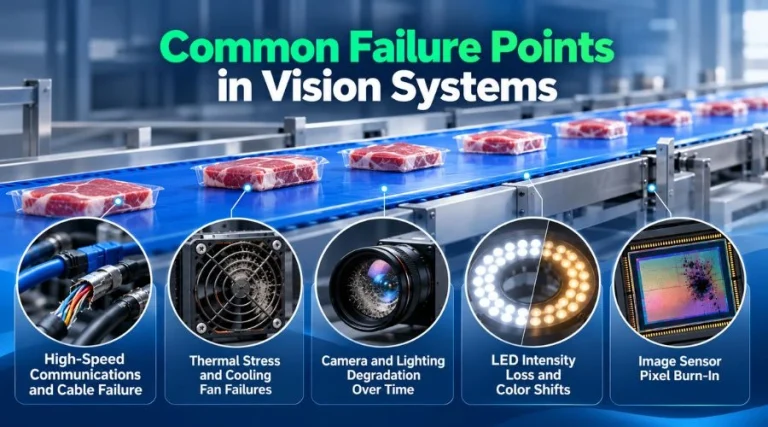
When an industrial optical sorting technology network is deployed for non-stop production, the internal electronic components encounter continuous thermal and mechanical stress. The most critical, yet frequently overlooked, vulnerability point in an automated vision sorting machine or a multi-lane optical sorting machine setup is the core image processing computer and its communication links.
High-Speed Communications and Cable Failure
Modern AI vision sorting machines capture thousands of images per second, generating large streams of high-resolution graphic data. This data travels from the camera arrays to the core processor through delicate high-speed fiber-optic lines or shielded connections.
In a high-capacity facility—such as a fast-paced vegetable sorting machine plant or a bulk fish sorting machine line—the conveyor frame is subject to continuous low-frequency vibrations from nearby motors and shakers. Over months of 24/7 operation, this small, rhythmic shaking creates microscopic stress cracks inside data cables and connectors. This structural wear results in dropped data packets, causing the software to experience brief processing pauses or tracking lag that directly lowers your line’s overall efficiency.
Thermal Stress and Cooling Fan Failures
The computer chips that run advanced deep-learning neural models generate considerable heat during continuous operation. To prevent overheating, industrial sorting equipment cabinets rely on integrated air conditioners, vortex cooling tubes, or heavy-duty internal fans.
If an internal cooling fan fails or its external filter becomes blocked by fine dust, the temperature inside the control enclosure can rapidly spike. When thermal limits are crossed, the processor automatically slows down its clock speed to prevent permanent hardware damage. This sudden drop in processing power compromises your line’s tracking speed, forcing the system to miss sub-millisecond windows. As a result, the machine begins misrouting good product, causing an unexpected spike in your false reject rate and extending your equipment’s payback period.
Camera and Lighting Degradation Over Time
The foundational accuracy of any automated optical sorting run depends entirely on the clarity of the image captured by the sensor array. If the initial visual data is blurry, dark, or distorted, the downstream neural networks cannot perform precise sorting, regardless of how advanced the underlying software model is.
LED Intensity Loss and Color Shifts
Industrial LED lighting panels are built to last, but they degrade over thousands of operating hours. In a 24/7 processing plant, an optical sorting equipment array logs approximately 8,760 hours of active operation per year. As LED diodes age, their light output drops, and their color temperature undergoes a subtle spectral shift.
When light levels fade or colors drift, the product stream appears darker or differently toned to the camera sensors. A bright red item moving down a tomato sorting machine tray or a delicate berry on a blueberry sorting machine line will show a different pixel value if the background illumination degrades.
Traditional sorting machines cannot adapt to these slow lighting shifts in real time. The software continues to evaluate incoming objects against its initial calibration settings, mistaking ambient dimness or changing shadows for actual surface rot or mold. This causes a major spike in product giveaway, hurting your yield and lowering profitability.
Image Sensor Pixel Burn-In
Industrial cameras that run non-stop are subject to internal pixel burn-in. If a food sorting machine line runs a highly uniform product for weeks without interruption, the exact same colors and lighting levels hit the exact same pixels on the sensor chip continuously.
Over time, this intense, repetitive light exposure creates permanent pixel ghosting or static blind spots across the scanning window. When a product subsequently passes through these burnt-in areas, the vision inspection system sees a distorted image, misinterpreting the pixel error as a product blemish and blowing clean product into the reject bin.
Dust, Moisture, and Contamination Challenges

Environmental contamination is an unavoidable reality of raw food production. Different manufacturing lines introduce distinct airborne particles that challenge the sealing and mechanical integrity of your food sorting equipment.
The Dry Processing Hazard: Fine Airborne Dust
In bulk processing plants running a high-capacity nut sorting machine line or handling dry agricultural goods, fine dust and loose skin fragments fill the air. As this airborne dust settles over the glass faceplates protecting your optical lenses, it blocks and scatters the light passing through the scanning chamber.
To a standard software algorithm, these dark dust patches look like actual product contaminants moving through the line. The pneumatic ejector valves begin firing continuously, dumping clean product into the waste stream. Without automated self-cleaning air knives or an advanced intelligent sorting system designed to digitally subtract lens debris, dust accumulation will cause a sudden spike in false alerts, forcing you to stop production for manual cleaning.
The Wet Processing Hazard: Moisture Ingress and Chemical Attack

In protein and marine facilities, the primary threat to optical sorting machines shifts from airborne dust to high humidity, water spray, and aggressive sanitation chemistry. Executing continuous sorting fish runs or high-volume fish sorting lines means dealing with constant moisture, salt brine, and natural fats.
During the intensive sanitation shifts required in modern plants, cleanup crews spray equipment with high-pressure water up to 100 bar and hot cleaning foams up to 80°C. If a fish sorting machine lacks a fully verified washdown housing, this intense spraying can force moisture past standard rubber seals.
Furthermore, when cold water hits a warm electronics cabinet, the rapid change in temperature creates a internal vacuum effect, drawing humid air into the enclosure. This moisture condenses on sensitive lenses, causing a fogging effect that blinds the camera array and shuts down your sorting and grading of fish line.
How to Establish a Proactive Preventative Maintenance Routine for Sorter Lines
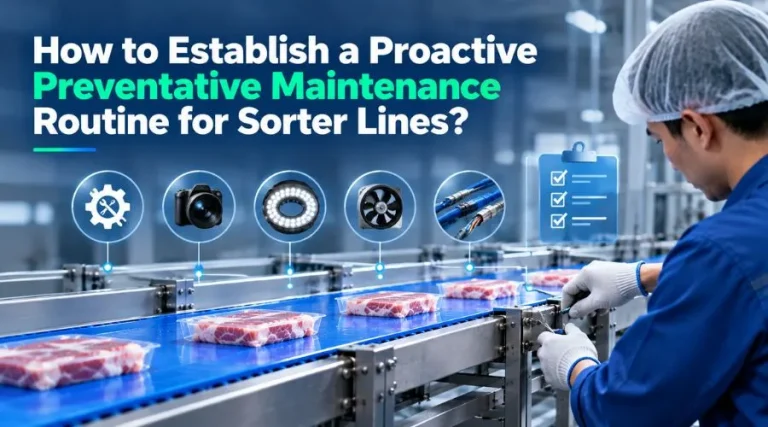
To maximize machine lifespan and prevent unplanned shutdowns on high-speed continuous lines, maintenance teams should follow a standardized calibration strategy.
Step 1: Execute Daily Mechanical Inspection and Sensor Cleaning
Shut down the conveyor line briefly during scheduled shift changes. Use lint-free optical wipes and approved cleaning solutions to clear all dust, moisture, and fat residues from the glass faceplates protecting the vision inspection system lenses. Inspect the pneumatic ejector nozzle tips to ensure no product debris is blocking the air valves.
Step 2: Run Weekly Electronic Diagnostics and Dynamic Calibration
Access the central control interface of your AI vision sorting machines and run the integrated electronic diagnostic utilities. Check internal cabinet temperatures, processor utilization rates, and data transmission logs to identify any dropped data packets. Run certified test cards across the tray to verify that both your sorting accuracy and sorting sensitivity match your target metrics.
Step 3: Perform Monthly LED Output Validation and White Balance Tuning
Use an industrial light meter to measure the actual illumination levels inside the scanning chamber. Compare the current lux values against your initial system baseline to check for LED degradation. Use the software utility to execute an automated white-balance calibration, allowing the neural networks to adjust for any minor color shifts in the lighting array.
Step 4: Execute Quarterly Cabinet Seal and Cable Integrity Verification
Inspect all external power, data, and sensor cables for micro-abrasions, cracks, or signs of wear caused by conveyor frame vibrations. Open the main control enclosure and examine the internal rubber gaskets for cracking or hardening from chemical exposure. Replace any worn components immediately to preserve your system’s washdown protection rating.
Spare Parts and Uptime Strategies
For any facility running continuous 24/7 manufacturing operations, the true cost of an equipment failure is calculated by the minute. If a critical component inside a high-throughput fruit sorting machine or a dedicated seafood sorting machine fails, the entire upstream production line grinds to a halt, causing costly product backup and lost revenue.
High-Frequency Pneumatic Ejector Valve Failure
The pneumatic ejector valves inside a high-speed sorting machine undergo massive mechanical stress, firing millions of times per week to remove defects from fast-moving lines. Over months of non-stop operation, the internal springs and seals inside these fast-acting valves wear down.
When a valve begins to fail, its mechanical response time slows down. This delay changes your rejection timing, causing the air blast to miss the target contaminant and hit adjacent clean product instead. This failure directly spikes your false reject rate and causes unnecessary fruit sorting or sorting of fruits waste. To prevent long shutdowns, plants must keep pre-assembled valve blocks on site, allowing workers to swap out a faulty assembly in minutes.
Essential Remote Monitoring and Digital Support
Modern automated optical sorting lines utilize remote digital monitoring to catch hardware issues before they cause an unexpected shutdown. By linking your factory’s intelligent sorting system directly to a secure network, off-site support engineers can monitor machine performance in real time.
This connection tracks critical operating data—including internal camera temperatures, valve response times, and power supply voltages. If the remote system spots a warning sign, such as an internal temperature spike or a drop in light intensity, it can alert your team to schedule maintenance during a planned shift change, protecting your line’s sorting capacity and ensuring smooth production.
Industry-Specific Challenges: From Fruit Grading to Seafood Processing
Different food processing sectors present unique operating environments that require specific machinery configurations to prevent early component wear.
The Agricultural Sector: Fruits and Vegetables
Facilities handling fresh produce must manage high volumes of organic debris and variable material streams daily.
- Fruit Grading Lines: Operating a high-speed fruit sorting machine or an automated fruit grading machine line means dealing with natural fruit sugars and acids. If juice splatters onto conveyor components during fruit sorting or the sorting of fruits, it can dry into a sticky residue that jams mechanical gates. To prevent this, premium fruit sorting equipment features sloped drainage trays and automated water-rinse cycles that clear the line during operation.
- Vegetable Processing Lines: On lines running a high-capacity vegetable sorting machine or a tomato sorting machine, the equipment must withstand continuous abrasive soil, mud, and sand. If this abrasive grit gets into standard conveyor bearings, it can cause early mechanical failure, making heavy-duty seals essential.
The Marine Protein Sector: Seafood and Fish Sorting
Protein processing lines present some of the most corrosive environments for automated machinery due to high salt levels and intensive cleaning routines.
- High-Salinity Corrosion: Running continuous fish sorting or sorting of fish lines means exposing your equipment to a high-salinity environment. If a standard fish sorting machine uses low-grade metals or non-treated fasteners, salt spray can quickly cause rust along critical structural joints and frames.
- Dynamic Material Tracking: Whether your plant needs to sort fish by length, manage high-volume sorting fish runs, or execute precise sorting and grading of fish by quality, the underlying optical sorting equipment must feature marine-grade 316 stainless steel housings to prevent structural corrosion from ruining your line’s alignment.
By matching your machinery configurations and protective enclosures to the specific physical demands of your product stream, your plant can prevent early component failures, lower maintenance costs, and ensure your continuous production lines run efficiently for years.
Strategic Summary: Core Takeaways for Plant Managers
Keeping high-capacity sorting lines running smoothly in demanding 24/7 food production environments requires a proactive approach that balances physical machine protection with smart software monitoring.
- Protecting Data Lines: Continuous mechanical vibration from conveyor frames can cause small stress cracks inside high-speed data cables, making robust strain-relief mounts and regular cable checks essential.
- Managing Optical Aging: Industrial LED lights naturally lose intensity and change color temperature over thousands of operating hours, requiring regular white-balance calibration to prevent accuracy drift.
- Controlling Contamination: Airborne dust in dry plants and moisture ingress in wet facilities can blind camera lenses, making automated self-cleaning air knives and high-protection enclosures critical for continuous operation.
- Minimizing Downtime Risks: Keeping pre-assembled spare parts—like quick-change ejector valve blocks—on site allows maintenance crews to resolve hardware issues quickly, protecting your daily production capacity.
By combining durable, washdown-safe hardware frames with proactive maintenance schedules and advanced diagnostics, food manufacturers can eliminate unexpected operational bottlenecks, maintain absolute safety compliance, and maximize long-term profitability.
FAQs
What are the most common mechanical failure points in an AI vision sorting machine during 24/7 operations?
In continuous production environments, the most common mechanical risks stem from conveyor frame vibrations and pneumatic fatigue. An advanced vision sorting machine or high-throughput sorting machine utilizes high-speed pneumatic ejector valves that fire millions of times per week. Over time, internal valve springs degrade, altering rejection timing and causing the system to miss defects. Additionally, ongoing line vibration can create micro-fractures in high-speed data cables, leading to dropped packets between the camera array and the core image processor.
Can an automated optical sorting line prevent damage when handling delicate agricultural products?
Yes. When engineers design vision sorting machine platforms for fragile commodities, they combine intelligent software with variable pneumatic controls. For example, when processing on a high-speed fruit sorting machine, fruit grading machine, or specialized tomato sorting machine line, the automated optical sorting system dynamically calculates the mass and velocity of each item. If a delicate berry is identified on a blueberry sorting machine track, the controller instantly lowers the pneumatic pressure to ensure the air blast shifts the item into its proper bin without causing physical bruising.
How does a vision inspection system handle reflective surfaces on a seafood sorting machine cold line?
Surface moisture, moisture films, and frost create intense light reflections that can blind traditional color cameras. A top-tier seafood sorting machine or industrial frozen food sorting machine addresses this limitation by pairing specialized infrared sensors with an advanced industrial vision sorting camera network. This allow the vision inspection system and its associated deep learning sorting software to look straight through ice glazes, ensuring a highly consistent sorting accuracy whether you run an automated fish sorting machine line or bulk frozen food channels.